
AUTHOR: ABI MCINTOSH
Formula 1 is different for everyone – some people dedicate their entire lives to the sport, while others don’t really see the appeal. But if you’re interested in learning more about it, this is the article for you! Anyone can watch, and everyone can enjoy, so please read on to find a crash course on everything you need to know to start watching.
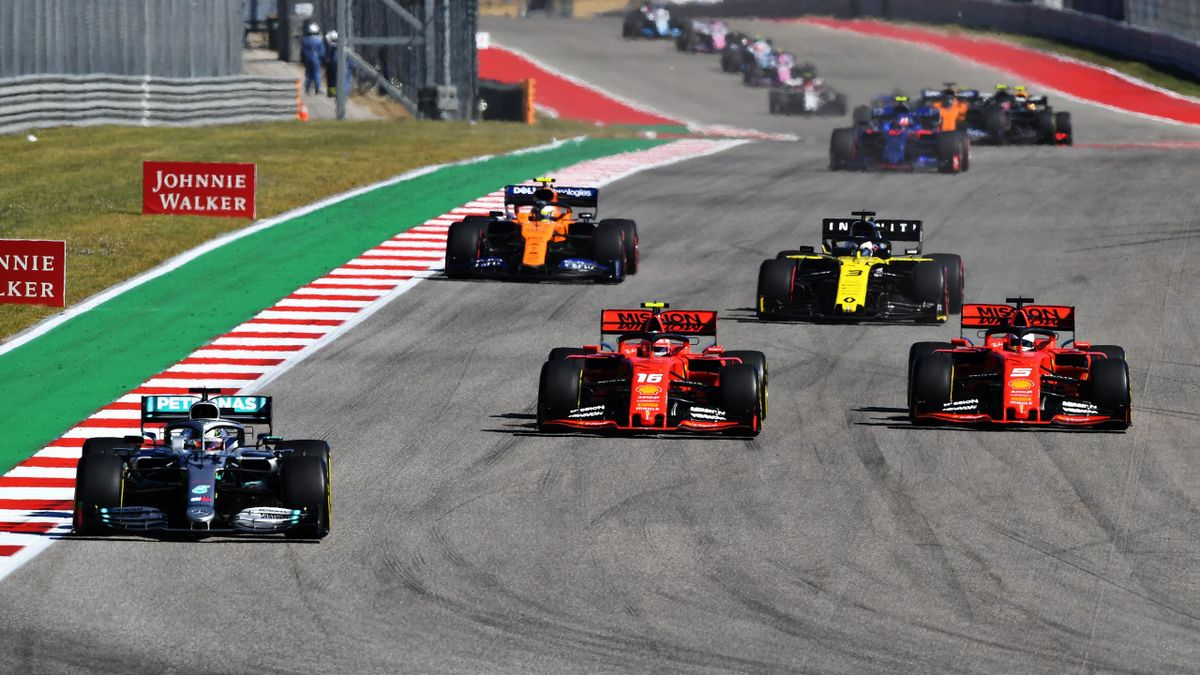
If you don’t know anything about Formula 1, it is a championship of races across the globe and is the pinnacle of single-seat motorsports. The Fédération Internationale de l’Automobile sets the rules and regulations for motorsports, but most people just call it the FIA. There are twenty-two races altogether, raced by twenty drivers in ten teams. Each team has two drivers, along with a multitude of behind-the-scenes workers like engineers, strategists and team principals. The array of drivers is called the ‘grid’, and they all compete to win points. These points are tallied up at the end of the season, and the world champion is the driver with the most. Teams also compete against each other in the constructor’s championship, where they go head-to-head for the top spot.

Each Grand Prix is raced on a different track. They can be built especially for races, or, in some places like Monaco, the track is actually part of the city. Parts of the road are blocked off to make the track, and the narrow space makes it super difficult to overtake anyone. Each track has a pitlane, where the drivers stop momentarily to swap out worn tires or return their cars after the race. Driving into the pitlane during a race is commonly referred to as ‘boxing’ or ‘pitting’, and the engineers manage to take off and replace tires in less than five seconds. Drivers must not exceed a speed of 60km, and Sebastian Vettel, unfortunately, holds the record for the fastest penalty in F1 history. He got a bit too excited at the start of a race, exceeded the limit, and, within nine seconds of his F1 career, was awarded his first penalty.
There are three different types of dry-weather tires that engineers use for cars, which commentators often comment on: hard, medium and soft. The type of tire depends on lots of different things, like track conditions, weather or the length of the race. There are two types of rain tyres – intermediate and full wets – that are only used when the track is wet.
Each Grand Prix is generally scheduled on or around the weekend, but because most are in Europe, Australians have to be up at all hours to watch them live. Most races start with three practice runs over two days, commonly referred to as ‘free practice’. The day after is generally qualifying, where the drivers race the track to determine what order they’ll start the race in. The top position is commonly referred to as a ‘pole’ position, and the rest are P2, P3 and P4 etc. all the way to P20. Qualifying is one hour long, broken into three sections, each twenty minutes long. After the first twenty minutes, the last five drivers are eliminated, and their positions are set. The next twenty minutes again see the slowest five drivers eliminated, with the final section determining the final ten positions for the race the following day.
Drivers do anywhere from 50 to 70 laps per race, and additional points are awarded to the driver that sets the fastest lap of the day. The race starts with a green flag, to signify everything is good and the conditions are normal. If there is extreme weather, a red flag might be shown to slightly postpone the start of a race, however, this cannot exceed three hours. If a red flag is shown during the race, drivers must slow significantly and return to the pitlane. A yellow flag is shown if there is a hazard on the track, and a safety car, either virtual or real, is often deployed afterwards. Under a yellow flag, drivers must slow down and are not allowed to overtake. A black and white flag split diagonally is shown for a warning of unsportsmanlike behaviour from a driver, generally for exceeding track limits. Black flags are rarely shown in F1, however, they result in the disqualification of a driver. In 1969, Al Pease was disqualified from the Canadian Grand Prix for going too slow – which is odd for a driver in the pinnacle of motorsports – as he’d only done 22 laps, compared to the leader’s 46. A black and white chequered flag is shown to signify the end of a race, and the drivers are permitted to finish their lap, but not start a new one.
Unfortunately, F1 is an incredibly dangerous sport. Crashes are bound to happen, and some can even be life-threatening. Many drivers on the grid have family members or friends that have died on the track. To this day, fatal accidents do still occur, despite the precautions in place. If a crash occurs, or the car has engine problems and the driver cannot continue, they DNF – Did Not Finish. They forfeit their place in the race and receive no points. A lot of the time, there are at least one or two DNFs, because engine failure and crashes are unfortunately common.
‘DRS’ is another common acronym in F1, short for Drag Reduction System. It’s a small flap towards the rear of the car, that opens and creates a higher top speed. There are only certain times and parts of the track that DRS is permitted; specifically when a driver is within a second of the driver in front. Top speeds are generally around three hundred, with Valtteri Bottas holding the record for the highest speed – at 372.5 kilometres per hour.
If a driver finishes in the top three, they receive a podium position. If they finish in the top ten, they receive points. As mentioned before, these points are tallied to determine the World Champion. The winner is awarded 25 points, while 2nd place gets 18. Third place is awarded 15 points, and an extra point is given to the driver who sets the fastest lap. 12 points go to fourth place, 10 to fifth, 8 to sixth and so on and so forth until tenth place, which receives one point. The rest of the drivers get no points, making it entirely possible for a driver to finish the season on zero points. This system is why drivers try their best to keep the car running after spinning out or making contact with another driver. By staying in the race they might make up some points or get their place back; turning off the car means they DNF and forfeit any points they might possibly have made.
After a race, when the drivers are standing on the podium, dousing each other with champagne and receiving their trophies, different kinds of music plays. It can be confusing when the crowd stills and you start hearing music blast through the speakers, but there’s definitely a reason for the madness. Firstly, the national anthem of the winning driver’s home country is played, followed by the national anthem of the winning constructor. Then, the intro to George Bizet’s ‘Carmen’ plays. At last, the champagne drenching commences!

Once everyone is thoroughly sticky, the drivers head over to interviews with various sports reporters, to give their opinions and views on the race. If a driver has done well, they’re generally pretty happy, but there tends to be a fair bit of disappointment after races. Even if a driver has won, a lot of them will say that they will ‘continue pushing’ for the rest of the season. They move their focus to the next race very quickly and are always thinking about their next steps, and improvements they could make.
Unfortunately, female drivers are very uncommon in F1. There aren’t any specific rules that prevent women from driving, but it’s very difficult to get a start in Formula 1 when it is seen as a ‘man’s job’. There’s only been five in the history of the sport, and there are no women on the grid today. Lella Lombardi is the only woman to ever score points in F1, when she placed sixth in the 1975 Spanish Grand Prix. There is a W Series that is exclusively women though, so be sure to check that out!
Mentally and physically, Formula 1 is a very difficult sport for everyone involved – but it’s also one of the most interesting sports you can watch. There’s a lot of information that is helpful to understanding what’s happening, but you don’t need to know everything. Whether you’re a new fan or an old one, F1 is open to everyone, and anyone can enjoy it. If you like what you’re watching, there’s no need to understand every part of the sport or suddenly become an engineer overnight – just enjoy yourself. There’s no such thing as a fake fan.
If you’ve enjoyed this article and are looking for races to watch, there are some recommendations below:
2011 Canadian Grand Prix
2020 Monza Grand Prix
2014 Hungarian Grand Prix (this is a great pick for all the Aussies out there!)
Netflix’s ‘Drive to Survive’ also follows the drivers through the championship, and allows a behind-the-scenes look at their lives and careers.
External sources used: https://www.formula1.com/