

BY: MADELINE MARSHALL
The lives of movie stars, billionaires and the influential. The answer of ‘who they really are and what they are truly like behind the screen’ is one that everyone wants to know. In Taylor Jenkins Reid’s new novel, we get just that and so much more. Her latest novel is about a writer Monique Grant who writes the biography of a famous 1960’s Hollywood actress Evelyn Hugo and reveals the truth about who she was and all her secrets. The book has been described as an international bestseller and is said to have a Netflix film coming soon, so clearly people have been loving it all across the globe not only for the feeling that it gives you of knowing a celebrity’s secrets but also for the way that Reid writes Evelyn and the way she depicts her relationships. They are extremely complicated and have various layers, including aspects of gender roles and stereotypes.
Evelyn Hugo, the main character, was an actress and more. Some may describe her as ruthless, unapologetic about getting what she wanted, awful, selfish, or even egotistical. Whereas others may have described her as intelligent, caring, protective and incredibly loving. Evelyn is also a very self-aware character; this may be due to the retrospective tone of the biography, regardless, it adds to the realism of the book as it makes the audience reflect and consider their own actions and relationships. There are so many sides to Evelyn depicting how human she is, which is believed to be one of the reasons why this book was such a success.
With such a multifaceted character like Evelyn Hugo, her relationships could not be perfect, they have to have depth. Her relationships were never black or white either; they were always unconventional. Particularly that of her ‘great loves’ (Reid, 2017) Celia St James and Harry Cameron.
CREDIT: Viviane Ding.
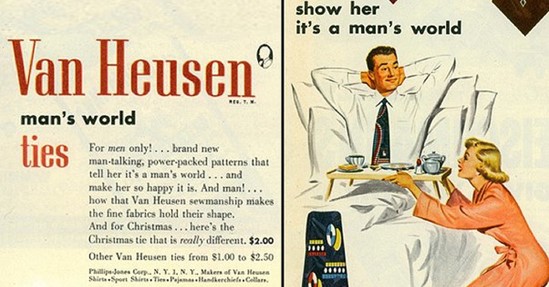
Back in the 1950’s there were expectations and clear roles that women and men should play in their marriage. Woman should be the “mother, homemaker” (Edwards, 2017) and “housewife” (C.Ht., n.d.), and the father’s role was “to be the breadwinner, advice giver, and family disciplinarian” (C.Ht., n.d.). This time period in America was filled with conformity and expectations, with everyone striving to achieve the ‘American dream’ (C.Ht., n.d.). The idea of a successful marriage was based entirely on function and bliss rather than the idea of complete love – which is seen as a successful relationship today. Back in the 1950’s people were not able to be with who they wanted, particularly if that person were different from ‘the ideal’ in some way, including race, gender, or economical/social standing. Looking at the way that Greek Philosophers such as Plato and Aristotle categorised love, the stereotypical 1950’s marriage would fall under the categories of Storge and Pragma. Storge being the idea of “familial love” (Dictionary.com, 2022) and Pragma referring to “practical love” (Dictionary.com, 2022).
Reid depicts Evelyn’s relationship with Celia as a very intense and deep love. The Greek categories of love that would apply to their relationship would be Eros and Mania. Eros referring to “physical love” (Dictionary.com, 2022) and Mania meaning “obsessive love” (Dictionary.com, 2022) or chaotic love. Their relationship was filled with a never-ending cycle of hurdles including that of the stigma of being lesbian or bisexual in the time or Celia’s illness. The beginning of their relationship was very passionate, however, Celia was portrayed by Reid as possessive and Evelyn as selfish. This resulted in their love, despite its purity and intensity, not being enough to overcome their hurdles. The gender roles were not noticeably clear in their relationship as both Evelyn and Celia were very headstrong and were competing to be the head of the family, with no clear matriarch. However, as Evelyn was Connor’s biological mother, she would be the primary caretaker out of the two, only receiving secondary aid from Celia.
Evelyn and Harry’s relationship was also depicted as intense; however, it was in a way that they had a deep understanding of one another. Their love could be described as Philia, Storge, Agape and Pragma. Philia refers to “affectionate love” (Dictionary.com, 2022) and Agape refers to “unconditional [or] sacrificial love” (Dictionary.com, 2022). If the 1950’s standards of a ‘successful’ marriage were to be used then, as the categories of Harry and Evelyn’s relationship align much more clearly, their relationship would be considered more successful. Throughout the novel Harry and Evelyn did not use each other, particularly because Harry was gay, so anything that she could have offered was fruitless to Harry. This meant that they formed a genuine relationship based on trust and friendship. Despite that they were in a heteronormative relationship, the roles which Harry and Evelyn had were different to that of 1950’s stereotypes. Rather than Harry being the provider, both provided and funded their family. Rather than Evelyn being the primary caretaker both shared the role.
These varying representations of gender roles had a very substantial effect and impact on the audience. Taylor Jenkins Reid’s portrayal of gender roles shows the readers a possibility on the ways in which a family can look and function. Also, how a family is complex and can come in all different shapes and sizes. This serves the purpose of leading the reader to be more open-minded.
Taylor Jenkins Reid’s plot, writing style, characterisation, and versatile portrayal of gender roles in the ‘Seven Husbands of Evelyn Hugo’, all combine to make a spectacular and ruminative novel. Reflecting why her novel was on the best seller list. So, if you haven’t read it already, next time you go past your local bookstore you should pick this one up and give it a try.