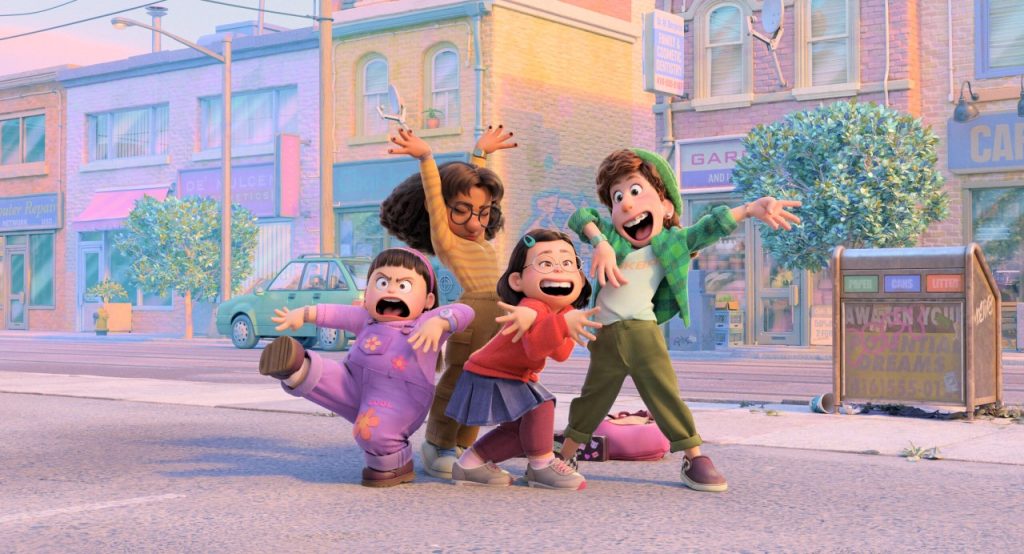
NOTE: The writer has chosen to be as unbiased as possible when writing this story. However, they do implore you to watch Turning Red, and would love to hear your thoughts about the film. They also recommend giving Pixar’s SparkShorts a try, which showcase a lot of perspectives from numerous demographics. They may not be as notable as Turning Red, but they are definitely worth listening to.
Let us go back to the date July 13th, 2021. It was on this day that Pixar, on its many social media platforms, would release the teaser of its newest film. However of course, this being the Internet, this day was not to go without controversy. As more and more viewers watched the video, comments about it circulated around the internet. While everyone’s opinion is valuable, regardless of how incomprehensible or nitpicky it is, a specific tidbit of criticism stuck out like sore thumb:
“Who needs this film?”
Unfortunately, it was expected that Turning Red (2022) would face such criticisms, despite not even being out yet. Being a film about a Chinese-Canadian teenager in the 2000’s, there is no doubt the plot is already out of the ordinary. The fact that the film was created by Domee Shi, an Asian woman, only fuelled the “foreignness” of the film even more. This issue only got worse once it was revealed that the main character would go through such unspeakable, horrible and disgusting circumstances such as *gasp* puberty and *a bigger gasp* disobeying one’s parents.
Although, one could argue that Turning Red’s themes are not all that different from anything Pixar or Disney has released over the past few years. The Little Mermaid (1989) has its plot kickstarted by its main character Ariel rebelling against her father, along with an onscreen death and mild nudity. Keep in mind that this film is practically beloved all around the world, with a child-friendly G rating to boot.
So what exempts Turning Red from this kind of treatment? Let’s address the elephant (or giant panda) in the room: there is truth to the argument that having an Asian-American protagonist is too niche for audiences to handle. This is all thanks to the very media we always see on TV.
As much as it is constantly debated about, representation of POC (People of Colour) in media is still prevalent to this day. Multiple articles about this topic state that in regards to the casts of kid’s TV shows, ‘sixty-five percent of characters were white’. Furthermore, remember that anthropomorphic animals have their own category for their representation, and almost always beat out racial minorities in terms of representation. The depth of this should probably be reserved for another article.
On the other hand, when they were shown on screen, ‘characters of colour … [were] more likely to be depicted as violent’ when it came to children’s media. If characters were lucky, however, they would usually take on the role as the main character’s best friend, or satellite love interest, or supporting cast member with the same amount of character development and focus (not a lot). It is very rare to see stories about a character of colour dealing with their specific struggles breaking out into the main public, and when they do, it is always bound to be met with attacks. Amongst them, especially, is the argument that their plights are not “relatable enough”
This all being said, the controversy surrounding Turning Red may not be based on rage, but simply confusion. Asian characters, let alone any non-white character, taking the limelight of Western media is not a common sight to see, and was even feared in the past. Turning Red was already taking a huge risk by showcasing a main cast full of minorities. Actually illustrating their struggles through the film’s themes of puberty and generational trauma heightened this risk.
This tale, however, has a good ending. Turning Red has been lauded for the new perspective it brings to the table. The film has not only touched the hearts of the Asian-American community, but also neurodivergent, LGBTQ+ and many other demographics. Notably, its far outreach goes against the idea of it being “niche”. For its credibility as a film, it still excels. Critics have given Turning Red a 94% on Rotten Tomatoes, earning its rank as an outstanding movie.
Although, its creators’ statements post-release have revealed that it would have shown more minorities’ perspectives if it hadn’t been for executive meddling. Examples include the character Priya and her perceived bisexuality. So sadly, even if Turning Red was successful in showcasing the life of a racial minority, the same could not be said for other marginalised groups.
Nonetheless, Turning Red is a reminder of why “being too niche” is not a bad thing, nor should it ever be. Diversity in media, especially children’s, is more than just pandering to a specific demographic. It opens doors to new stories worth sharing, and helps its audience realise that people don’t all have to think, look or be the same in order to share common ground. By letting those with a limited voice have a chance to share their stories instead of silencing them, we are allowing ourselves to become more tolerant. Continuing the release of these kinds of films ensures that some day any type of character can appear on screen uncensored and without criticism.
Overall, while audiences are still indifferent about the film, there is no doubt that Turning Red’s controversy has a message worth understanding. Perhaps, instead of asking why a film about a Chinese girl’s adolescence should ever exist, we should wonder what makes a story about any more outlandish than the fairy tales we know and love.